

In digital marketing, it is often said that "content is king"
Content has the power to attract, engage, and convert your audience online. Whether it's blog posts, videos, podcasts, or social media updates, creating high-quality relevant content is essential for building brand awareness, establishing authority, and driving meaningful interactions with your audience.
In this section, we'll explore the strategies and best practices for creating compelling content that resonates with your audience and drives engagement.
What is Content Marketing
Content marketing is a strategy where you create and share valuable, relevant content to attract and engage your target audience. This can include blog posts, videos, podcasts, and social media updates.
Instead of directly promoting your products or services, you provide useful information that educates, solves problems or even entertains. This builds trust and establishes you as an authority in your field, ultimately encouraging customers to choose you when they need what you offer.
Why Content Matters
Content plays a critical role in your digital marketing strategy for several reasons:
- Attracting Traffic: Valuable content attracts organic traffic to your website through search engines, social media, and other channels, increasing your visibility and reach.
- Building Authority: By sharing valuable insights, expertise, and thought leadership through your content, you can establish your brand as a trusted authority in your industry, earning the trust and respect of your audience.
- Engaging Your Audience: Compelling content captivates and engages your audience, sparking conversations, encouraging sharing, and fostering a sense of community around your brand.
- Educating and Informing: Content provides an opportunity to educate and inform your audience about your products, services, and industry, addressing their questions and concerns and guiding them through the buyer's journey.
- Driving Conversions: Well-crafted content can influence purchasing decisions, driving conversions and sales by showcasing the value of your offerings and addressing your audience's needs and pain points.
Types of Content
The digital landscape offers a wide variety of content formats to choose from. Here are some popular types of content to consider:
- Blog Posts: Informative articles, how-to guides, case studies, and thought leadership pieces that address topics relevant to your audience.
- Videos: Engaging visual content, including product demonstrations, tutorials, behind-the-scenes footage, and customer testimonials.
- Podcasts: Audio content that offers insights, interviews, and discussions on relevant topics within your niche, providing a convenient and accessible way for your audience to consume content on-the-go.
- Infographics: Visual representations of data, statistics, or processes that communicate complex information in a clear and visually appealing format.
- Social Media Updates: Bite-sized content, including status updates, images, and short videos, shared across social media platforms to engage your audience and drive traffic to your website.
The Steps In Content Marketing
Many businesses have attempted content creation, only to abandon it when their strategies didn't yield measurable outcomes. Even more disheartening is the reality that countless businesses are still churning out content weekly, only to gain a few vanity followers and face diminishing returns.
If you want have content marketing really to make an impact for your business, then you've got to understand how it works.
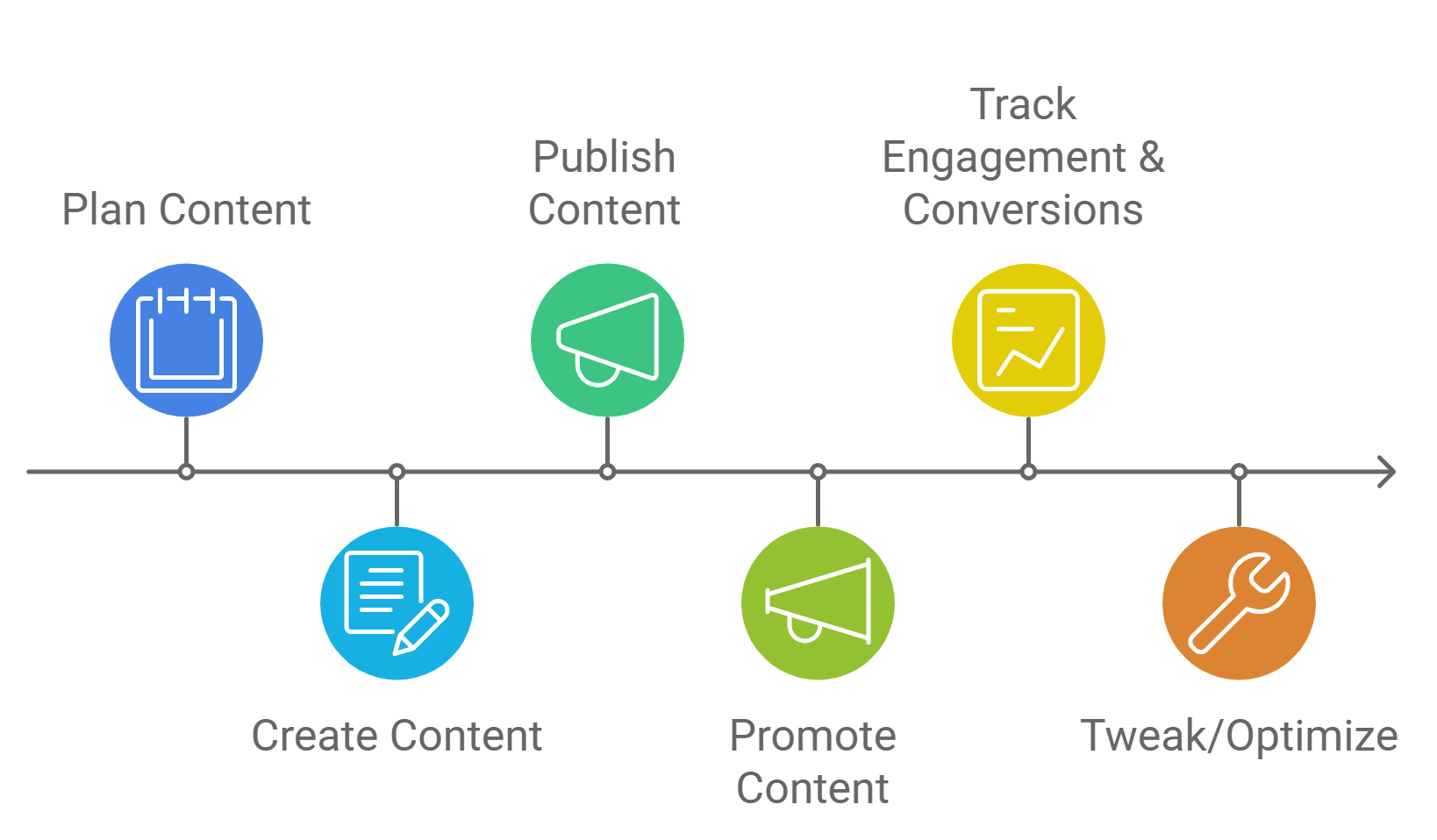
The steps in content marketing include:
- Planning Content
- Creating content
- Publishing Content
- Promoting Content
- Track Engagement & Conversions
- Tweak/Optimize
Planning Your Content
The first step is to plan and decide what content you want to create and how you’ll use the content to attract and convert traffic. You'll need to consider the following:
- What topics you'll create content about (based on the demand in your niche) - consider conducting keyword research, analyzing competitor content, gathering feedback from your audience through surveys, and staying updated on industry trends to generate ideas that resonate with your target audience.
- What types of content you'll create - this can be a combination of tutorials, tips, FAQs, case studies, product reviews, buyer guides, checklist, infographics, videos, audios, guides, etc.
- Which content-sharing platforms you will use - these include your blog, social media (Facebook, YouTube, Instagram, Twitter, etc.), a podcast, a webinar, your mailing list, etc.
- What's your publishing schedule - for your blog, your social media page, your newsletter
Creating Your Content
One of the first things to do when creating content is to come up with a good title... one that captures attention, speaks to the main benefits of the content, arouses curiosity and is succinct.
To create engaging and shareable content, consider incorporating storytelling techniques, using visuals to enhance your message, incorporating interactive elements such as polls or quizzes, and encouraging audience participation through comments, shares, and likes.
When creating content for your audience, it's essential to focus on quality, relevance, and authenticity. Here are some tips for creating compelling content that resonates with your audience:
- Know Your Audience: Understand your audience's needs, preferences, and pain points, and tailor your content to address their specific interests and challenges.
- Provide Value: Offer valuable insights, practical tips, and actionable advice that solve problems and add value to your audience's lives.
- Be Authentic: Share your unique perspective, personality, and brand voice to establish authenticity and connect with your audience on a personal level.
- Use Multimedia: Experiment with different content formats and multimedia elements to keep your audience engaged and cater to diverse learning styles.
- Optimize for Search Engines: Incorporate relevant keywords, meta tags, and descriptive headings to optimize your content for search engines and improve discoverability.
Make sure that your content pieces have a call to action (CTA)... tell the reader what to do next. And don't forget to proofread your content.
Consider all the content you need to create and determine the best way to do it that fits your budget, time and capabilities:
- Do it yourself from scratch
- Use private label rights content
- Outsource content creation
- Utilize AI tools to create content
- A combination of any of the above
If you're intimidated by the thought of using AI to create your content, you shouldn't be.
Check out the free "Creating Content with AI" Field Guide" - a crash course in using artificial intelligence tools to create better content, faster and easier than ever before.

Publishing and Promoting Your Content
Creating great content is only half the battle—promoting it effectively is equally important to maximize its reach and impact. Here are some strategies for promoting your content and amplifying its visibility:
- Share Across Channels: Distribute your content across multiple channels, including your website, blog, social media platforms, email newsletters, and industry forums.
- Engage with Your Audience: Actively engage with your audience by responding to comments, questions, and feedback on your content, fostering a sense of community and connection.
- Collaborate with Influencers: Partner with influencers or industry experts to amplify your content's reach and credibility, leveraging their audience and expertise to increase visibility.
- Paid Promotion: Consider investing in paid advertising or sponsored content to boost the visibility of your most important pieces of content and reach a wider audience.
A content calendar helps you maintain a consistent posting schedule and stay organized with your content creation efforts. Set realistic posting frequencies, plan content themes and topics in advance, and allocate resources effectively to ensure consistency in delivering valuable content to your audience.
By creating valuable, relevant content and promoting it effectively, you can establish your brand as a trusted authority in your industry, attract and engage your target audience, and ultimately drive business growth and success.
Recommended Resources
The "Creating Content With AI" Field Guide
Utilizing AI to produce content now allows entrepreneurs and marketers to produce results 10 times faster than before and saves an average of 2.5hours per day.
If you're not leveraging AI tools to create content for your business, then you'll be left behind.
The "Creating Content with AI" Field Guide is a crash course in using artificial intelligence tools to create better content, faster and easier than ever before.
The "Content Marketing" Field Guide
A collection of checklists, worksheets, cheat sheets, FAQs, swipe files, planners and other resources that help you create and publish content that attracts an engaged audience, builds your list of subscribers, and generates sales.
Blaze AI Content Marketing Platform

Leverage the power of AI to quickly generate tons of content ideas and transform them into engaging quality content pieces. It's ideal for budget conscientious solopreneurs and small business owners needing a convenient way to create content to market their business.