

Email marketing remains one of the most effective, reliable and profitable digital marketing channels for reaching your audience, nurturing leads, and converting sales.
In this lesson, we'll explore the fundamentals of email marketing, its role in lead nurturing and conversion, how to set up a mailing list and tips for crafting effective email campaigns.

What is Email Marketing
Email marketing involves sending emails to a list of people (your subscribers) who have given you permission to contact them.
It's a way to promote your products or services by sending messages directly to people's email inboxes. It's like having a conversation with your customers, where you can share updates, special offers, and valuable content. The goal is to build relationships, keep your audience engaged, and encourage them to make purchases or take specific actions.
It's a cost-effective way to reach a large number of people quickly and a powerful tool for building relationships with your audience, nurturing leads, and driving repeat business.
Why You Should Must Do Email Marketing
Email marketing plays a crucial role in every stage of the customer journey, from capturing leads to nurturing them into paying customers and retaining them over time. By delivering relevant and valuable content directly to your audience's inbox, you can stay top-of-mind, build trust, and guide them through the sales funnel towards conversion.
Here are 4 reasons why email marketing is still one of the most powerful digital channels to grow your business.
- You Own Your List of Subscribers - Once you build your list, no one can take it away from you. Even if you move to a different email marketing platform, you can take your list with you. Compare that to a platform like Facebook, where one rule change could make you lose your entire network without warning. Ouch!
- You can reach your prospects and customers any time - Many people enable push notifications for email on their phones, meaning you can reach your prospect any time. It’s a great way to build relationships with your audience and generate sales.
- There are fewer distractions - when someone goes to check their email, there’s only one thing they can do once they’re inside their inbox: read emails. If you craft an enticing subject line, they may even read your email FIRST. Compare that to social media, which is a circus of ads, games, pictures, videos and everything else to distract users. It’s hard to get attention when the entire site seems to be yelling to get your prospect’s attention!
- Email marketing is extremely profitable - your prospects willingly and eagerly joined your list because they WANT to read your emails. They want to see your product recommendations. They want to buy from you because they trust you.
In fact, there are numerous studies that show email marketing has the highest ROI with an average ROI of $40 for every $1 spent.
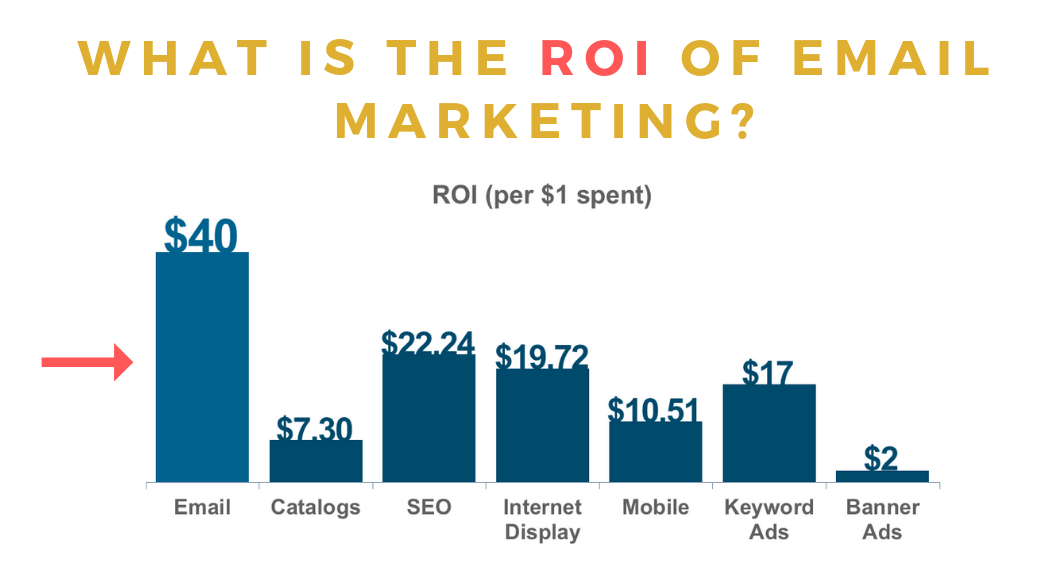
Source: Maven Marketing Lab
How To Set Up Your Mailing List
So, you understand that building a subscriber list is smart. But, how to you go about setting things up, and how do you build a list of responsive subscribers?
That's what you're going to learn in this lesson. Here are the three key steps you need to take to build a responsive list:
- Step 1: Create a Lead Magnet
- Step 2: Choose an Email Marketing Platform
- Step 3: Create a Lead Capture Page
Creating a Lead Magnet
A lead magnet is something enticing that you give away to your prospects in exchange for their email address. You can give away a wide variety of digital (downloadable) products, including:
- Audios
- Email courses
- Toolkits
- Webinars
- Case studies
- Checklists
- Newsletter
- Swipe files
- Cheat sheets
- Planners
- Discounts
- Reports
- Worksheets
- Templates
- Interviews
- Resource guides
- Memberships
- Software and apps
If it’s easy to deliver and instantly accessible, then it’s something you can give to your prospects.
For example, if you’re selling software, then you might offer a “lite” version of that software as a lead magnet. Or if you’re selling a debt management course, you might offer a package of debt management worksheets as a lead magnet.
That being said, here are the characteristics of a good lead magnet:
- It’s easy to deliver. (typically, a digital download that you deliver automatically through your email marketing platform or otherwise)
- It’s something your prospects really want. (Hint: do your market research to find out what it is that people really want.)
- It has a high perceived value.
- It solves a specific problem.
You can create the lead magnet yourself or outsource it.

Create something that naturally leads to your paid offer. Be sure you have a strong call to action for the paid product at the end of your lead magnet.
Choose an Email Marketing Platform
An email marketing platform is a tool that helps you create, send, and manage your email campaigns.
Think of it as an assistant that organizes your contact list, designs professional-looking emails, and tracks how well your emails are performing. These platforms often include features like templates for easy design, automation to send emails at the right time, and analytics to see who opened your emails or clicked on links.
They make email marketing easier and more effective for small business owners.
When choosing an email marketing platform look for the following types of features:
- Opt-in form templates
- Email templates
- Segmentation
- Built-in testing and tracking
- Automation
- User-friendly
- Good deliverability
- Good uptime
- Good customer service
- Good company reputation
- Easy integration with your other tools and platforms
My Recommendation is MailerLite - It offers the best combination of features, great customer support, affordability and ease of use for solopreneurs and small business owners.

Plus, you'll get access to these 5 exclusive bonuses when you sign up with MailerLite.
Create Your Lead-Capture Page
The lead-capture page (also referred to as a "squeeze page" or "opt-in page") is a page that has some copy that persuades prospects to provide their email list in exchange for the lead magnet, and a form that accepts their email.
Here are 3 examples of lead capture pages:

Source: Rich Dad
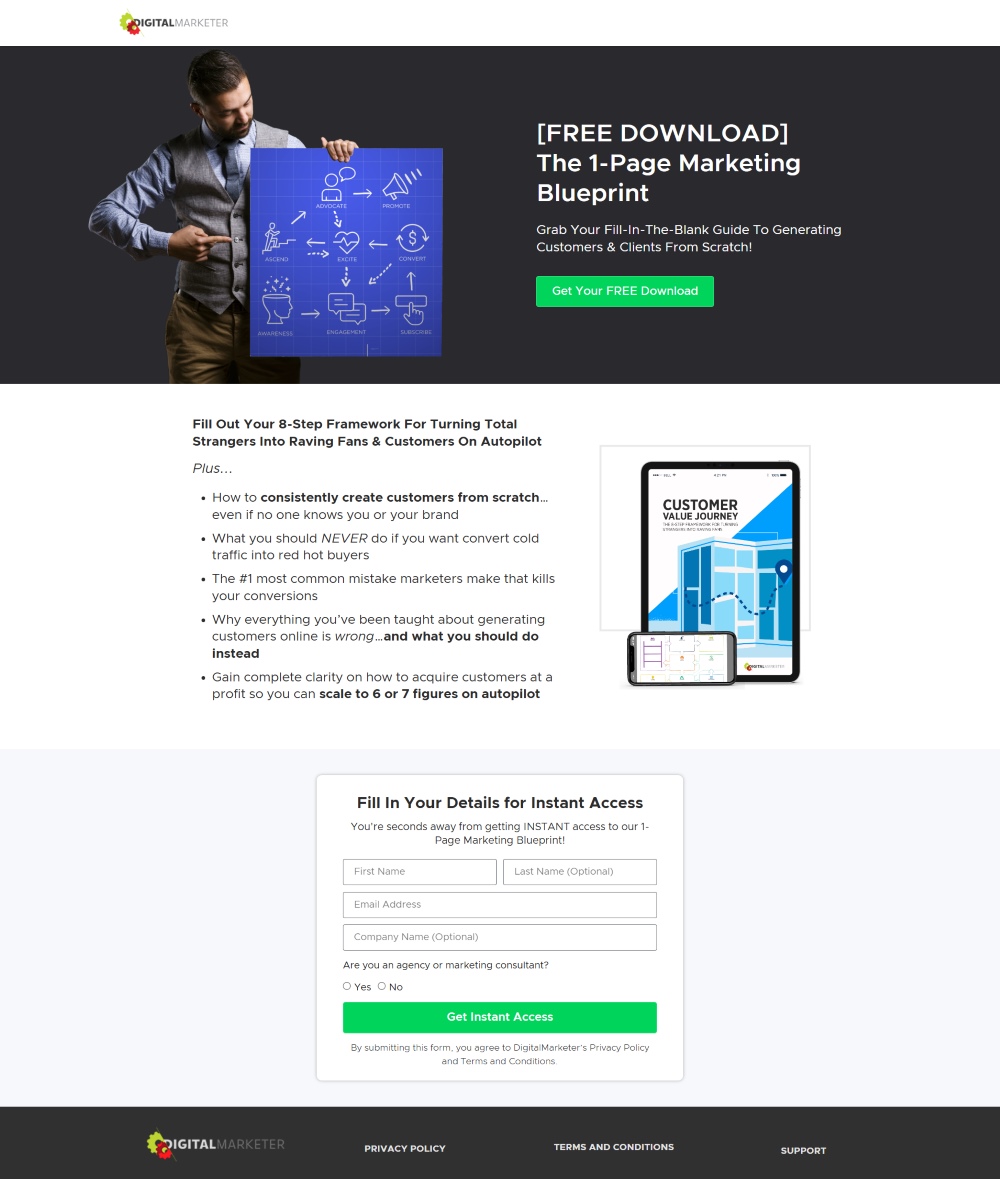
Source: DigitalMarketer
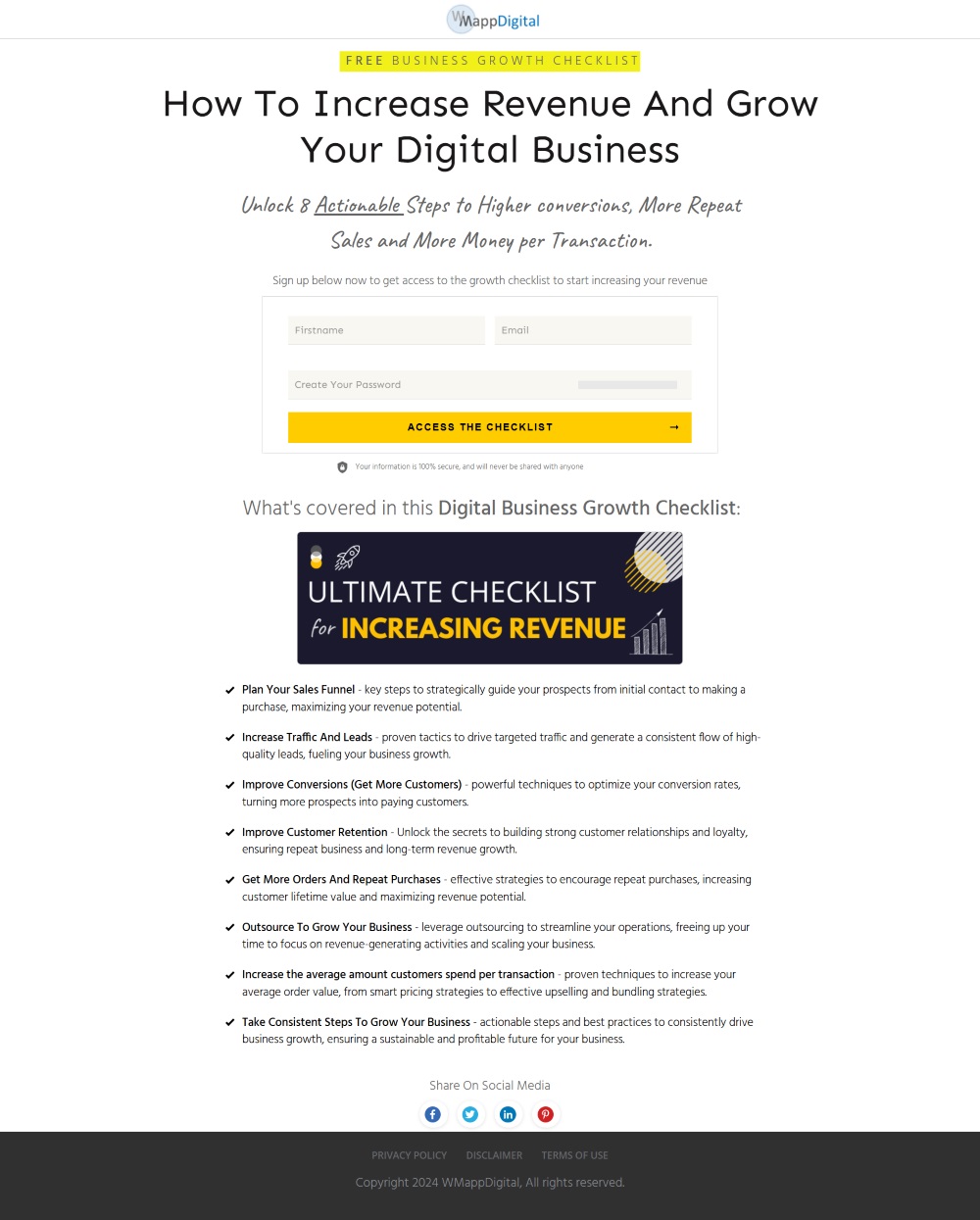
Source: WMappDigital
Your lead-capture page doesn't need to be long. These are the characteristics of a good squeeze page:
- It looks professional
- It should start with a strong benefit-driven headline
- It outlines your lead magnet's main benefits in a bulleted list.
- It has a strong call to action to encourage people to submit their emails
- Did you test your opt-in form to be sure everything works as intended?
You can create your lead-capture page using your website building platform or your email marketing platform.
In addition to your lead capture page, you can also capture emails using opt-in pop-ups, in content forms, header/footer forms, side bar forms.
Strategies for Building Your Subscriber List
Building a robust subscriber list requires a strategic approach and a combination of tactics to attract and retain subscribers. Here are some effective strategies to consider:
Opt-in Forms and Lead Magnets: Place opt-in forms strategically on your website, blog, and landing pages, offering valuable incentives such as lead magnets, discounts, or exclusive content to encourage sign-ups.
Content Upgrades: Create content upgrades—bonus materials or resources that complement your existing content—and gate them behind an email sign-up form to capture leads and provide added value to your audience.
Social Media Promotion: Leverage your social media channels to promote your email list and encourage followers to subscribe for exclusive updates, promotions, and behind-the-scenes content.
Contests and Giveaways: Host contests, sweepstakes, or giveaways that require participants to subscribe to your email list for entry, incentivizing sign-ups and generating excitement around your brand.
Referral Programs: Implement referral programs that reward existing subscribers for referring friends or colleagues to join your email list, leveraging the power of word-of-mouth marketing to expand your reach.
Best Practices for Nurturing Your Subscriber List
Once you've built your subscriber list, it's crucial to nurture your audience and maintain engagement over time. Here are some best practices for nurturing your subscriber list:
- Personalization: Segment your subscriber list based on demographics, interests, or past interactions, and deliver personalized content and offers that resonate with each segment.
- Consistency: Maintain a regular cadence of email communications, whether it's weekly newsletters, monthly updates, or automated drip campaigns, to stay top-of-mind with your audience.
- Value-Driven Content: Provide value with every email you send, whether it's educational content, exclusive offers, or entertaining stories, to keep subscribers engaged and interested in hearing from you.
- Two-Way Communication: Encourage feedback and interaction from your subscribers by inviting them to reply to your emails, participate in surveys or polls, or join exclusive community groups, fostering a sense of connection and belonging.
- Monitoring and Analysis: Track key metrics such as open rates, click-through rates, and subscriber growth over time, and use data insights to refine your email marketing strategy and optimize performance.
Crafting Effective Email Campaigns
To craft effective email campaigns that engage your audience and drive results, consider the following tips:
- Subject Lines: Write compelling and attention-grabbing subject lines that entice subscribers to open your emails. Keep them concise, clear, and relevant to the content of your message.
- Content Structure: Structure your emails for easy readability, with clear headings, short paragraphs, and bullet points to break up the text. Use visuals such as images and videos to enhance your message and maintain interest.
- Call-to-Action Optimization: Include clear and compelling calls-to-action (CTAs) that encourage subscribers to take the desired action, whether it's making a purchase, signing up for a webinar, or downloading a resource. Use action-oriented language and place CTAs prominently within your email content.
Measuring Email Marketing Performance
Track key metrics such as open rates, click-through rates, conversion rates, and unsubscribe rates to measure the effectiveness of your email marketing campaigns. Use A/B testing to experiment with different elements of your emails and optimize your campaigns for better results.
By leveraging email marketing effectively, you can nurture leads, build relationships with your audience, and drive conversions, ultimately contributing to the growth and success of your business.